
Understanding Yin & Yang Through a Feng Shui Lens
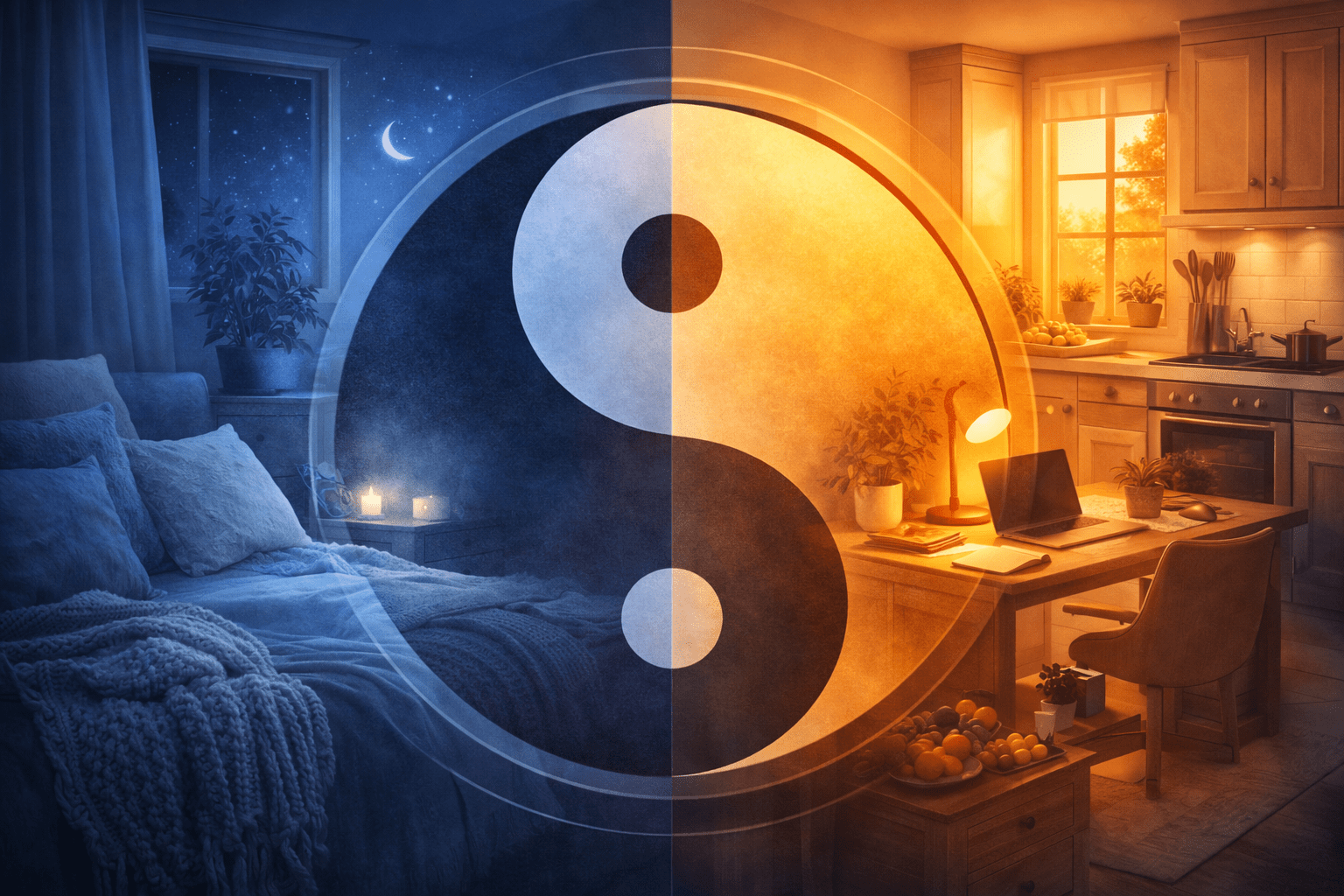
People hear “yin and yang” and think it’s just a symbol on a T-shirt. But in Feng Shui, yin and yang are the foundation of how a space feels, and why one room can calm you down while another makes you restless for no obvious reason.
Yin and yang aren’t “good vs bad.” They’re two complementary qualities of energy that need each other to function well. When they’re balanced, a home supports you. When they’re out of whack, you can feel it in your body: wired, drained, foggy, anxious, unmotivated, or unable to truly rest.
Let’s make this practical.
Yin vs Yang in Simple Terms
Yin energy is:
- quiet, soft, still
- dimmer light
- cool tones
- slow pace
- rest, recovery, inward focus
- night, water, moon, shade
Yang energy is:
- bright, active, loud
- strong light
- warm tones
- movement, stimulation
- productivity, socializing, outward focus
- day, sun, fire, sound
Every home needs both. The trick is making sure the right rooms lean yin or yang based on what you use them for.
Because the biggest Feng Shui issue isn’t “wrong decor.”
It’s yin spaces that feel too yang, and yang spaces that feel too yin.
The Feng Shui Rule: Match the Energy to the Purpose
Think of your home like a body.
- Bedrooms should be more yin (rest, repair, calm).
- Living rooms are usually balanced (conversation, connection, comfort).
- Kitchens tend to be yang (fire, movement, activity).
- Offices need healthy yang (focus, clarity, forward motion).
- Bathrooms are naturally yin and “draining” (water + release), so they need warmth and steadiness.
When the energy doesn’t match the purpose, you get friction.
Example:
- If your bedroom feels like a gym (bright lights, clutter, screens, loud colors), your sleep often suffers.
- If your office feels like a nap zone (dim, heavy, too cozy, too many soft textures), motivation can disappear.
How to “Read” a Room: Yin or Yang?
Stand in the doorway and ask:
- Does this room make me want to move or melt?
- Is my brain scanning, or settling?
- Is it visually loud, or visually quiet?
- Is there more softness or more sharpness?
- Is the lighting energizing or soothing?
You’ll know the answer instantly. Your nervous system is honest.
Signs Your Home Is Too Yin
Too much yin isn’t peaceful…it can feel heavy.
You might notice:
- low motivation, sluggishness
- rooms feel dark or “stale”
- too much clutter holding energy down
- you avoid certain areas because they feel depressing
- you feel sleepy but not truly rested
Easy ways to add healthy yang:
- open curtains, let in natural light
- add one brighter lamp (warm bulb if possible)
- bring in a living plant (movement + growth)
- add a little sound (soft music)
- clear one flat surface (instant lift)
- introduce one “upward” element: a tall plant, vertical art, a floor lamp
Signs Your Home Is Too Yang
Too much yang can feel edgy and overstimulating.
You might notice:
- trouble winding down
- sleep feels shallow
- constant restlessness
- harsh lighting or a “glare” feeling
- “busy” visuals everywhere (too much stuff, too many patterns)
- you feel like you can’t exhale in your own space
Easy ways to add yin:
- soften lighting (lamps over overhead lights)
- add texture (blankets, curtains, cushions)
- simplify surfaces (less visual noise)
- introduce calmer colors in small doses
- bring in grounded shapes (round, oval, soft-edged)
- create one quiet focal point where nothing is demanding your attention
Yin & Yang by Room: Practical Feng Shui Tips
Bedroom (Yin-forward)
Goal: calm, safety, sleep.
- keep lighting soft and layered
- reduce mirrors facing the bed (too activating for many people)
- minimize clutter under the bed (it can feel “busy” even if you don’t see it)
- choose fewer, calmer pieces over lots of decor
A bedroom should feel like a quiet exhale.
Living Room (Balanced)
Goal: connection + comfort.
- mix soft seating (yin) with good light (yang)
- keep a clear path through the room (movement without chaos)
- one focal point is better than many competing ones
- include something alive (plant) and something cozy (throw)
Kitchen (Yang-forward, but not chaotic)
Goal: nourishment, activity, flow.
- clear counters as much as possible (less stress)
- keep knives stored and sharp edges minimized if the space feels tense
- add warmth with a small plant or bowl of fruit
- good task lighting helps. but avoid harsh glare
Office/Workspace (Yang-forward, clean)
Goal: focus, clarity, momentum.
- brighter light, less clutter
- keep your chair supported (comfort is not the enemy of productivity)
- one inspiring object is enough, too many becomes distraction
- keep cords/loose papers contained
Bathroom (Yin + water “drain”)
Goal: clean, calm, stable.
- add warmth: soft towel, warmer bulb, gentle scent
- keep the door closed when possible
- fix leaks and drains (practical + symbolic: stop energy loss)
- keep it clean and simple, bathrooms hold “release” energy
Balance Can Be Seasonal (and Personal)
Your yin/yang needs shift.
- In winter, you often crave more yin: warmth, softness, quiet.
- In spring, yang naturally rises: movement, clearing, fresh air.
- During stress, you may need a stronger yin sanctuary to recover.
- During stagnation, you may need more yang to get unstuck.
Feng shui isn’t meant to be rigid. It’s meant to be responsive.
Create One Yin Sanctuary Spot
If your whole home feels off, don’t try to fix everything at once. Make one spot that signals safety.
Choose a corner or chair and give it:
- soft light
- one cozy texture
- one calming object
- one “no clutter” rule
Even a small yin anchor can change the tone of your entire home — because it changes you when you’re in it.
Final Thought
Yin and yang aren’t abstract concepts. They’re the difference between a home that looks fine but feels wrong… and a home that actually supports your nervous system.When you start noticing yin and yang, you stop arranging for appearance and start arranging for well-being. And honestly? That’s where Feng Shui becomes real.
Yin and yang don’t just live in our rooms, they show up in our routines, our choices, and how we move through the day. Some days call for yin: rest, quiet, reflection, slower pace, healing. Other days need yang: action, clarity, momentum, connection. When you start noticing what you actually need, you can choose the energy you want to work with each day instead of pushing against yourself. And that’s where balance becomes more than a concept , it becomes a way of living.