Buy Yourself the Damn Flowers
Flowers have a quiet way of getting through to us.
They bring the outside in. A small piece of nature on your table, your windowsill, your kitchen counter. In the middle of everyday life, flowers remind us that the world still makes beauty for no reason other than to exist. Colour, shape, scent, the soft miracle of something blooming. When life is heavy or the world feels too loud, flowers can be a small, steady mental health boost. They do not fix everything, though they shift the atmosphere enough to give your mind a place to land.
Why flowers help when you are struggling
Flowers offer a few things our nervous system loves: softness, predictability, and sensory comfort. Even a quick glance at a bloom can pull you out of spiralling thoughts and back into the present moment. Their colours can symbolize different emotional tones, their scents can cue safety and calm, and their presence can quietly change how a room feels.
There is also something deeply human about keeping something alive nearby. Caring for a bouquet is not a grand responsibility. It is a small act of attention. That matters.
The healing properties of flowers, without the fluff
Some people connect to flower meanings and symbolism. Some people just like how they look. Both are valid.
Roses can symbolize love, tenderness, and the courage to keep your heart open, even when you have reasons to shut down. Daisies often symbolize simplicity, innocence, and a return to what is uncomplicated. Lavender is associated with calm and rest, partly because its scent is genuinely soothing for many people. Sunflowers feel like resilience in plant form, turning toward the light because that is what they do.
None of this needs to be mystical to be effective. Flowers meet you at the level you are able to receive them.
Bringing flowers into daily life as real self care
This is not about perfection or creating a magazine home. It is about making your space feel like it is on your side.
A single stem in a glass on the windowsill counts. Grocery store tulips count. A tiny jar of wildflowers counts. Even a dried bundle that makes you smile when you pass it counts.
Try one of these gentle, low-effort approaches:
1) The one-flower practice
Pick one flower you love, put it in a clear glass, and place it somewhere you will see it often. Let it be a small anchor for your attention.
2) A five-minute reset
When your mind feels scattered, trim the stems, change the water, wipe the counter, then step back and look at what you made. The point is not cleaning. The point is the shift.
3) Colour as mood support
Choose flowers by how you want to feel. Soft whites and pale pinks tend to feel calming. Yellows can feel uplifting. Deep reds can feel grounding and strengthening. Let colour do what it does.
4) A tiny ritual for hard days
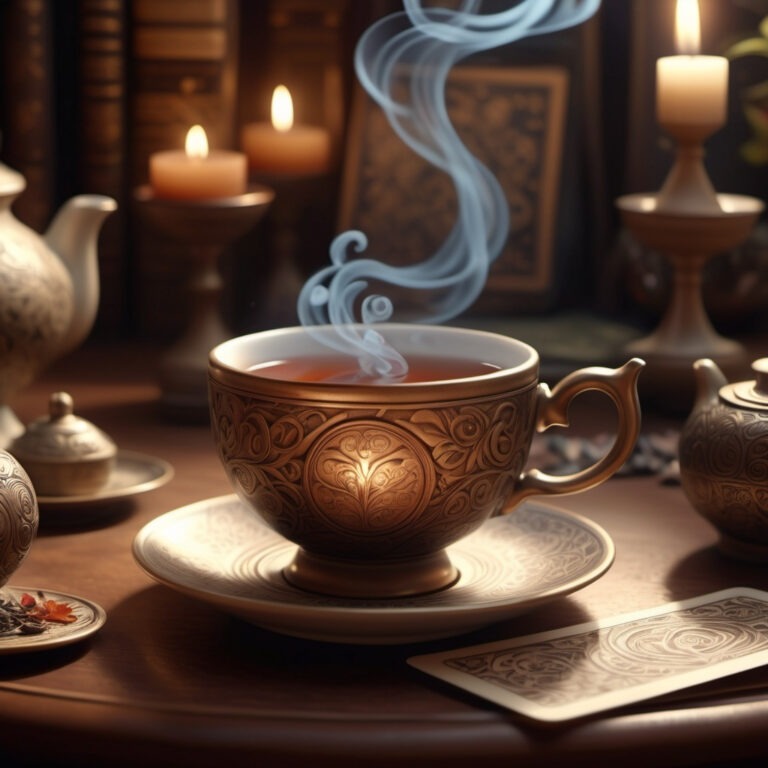
Light a candle, make tea, and sit near your flowers for two minutes. No analysing. No fixing. Just a pause that tells your system it is allowed to soften.
When you cannot access flowers
Sometimes money is tight. Sometimes energy is low. Sometimes winter is wintering.
Bring in what you can: a houseplant, a pine branch, a pressed flower in a frame, a photo you took of something blooming. A walk past someone’s garden still counts. Your brain responds to beauty whether you own it or not.
A quiet reminder
Flowers do not ask you to be cheerful. They simply offer presence. That is the gift.
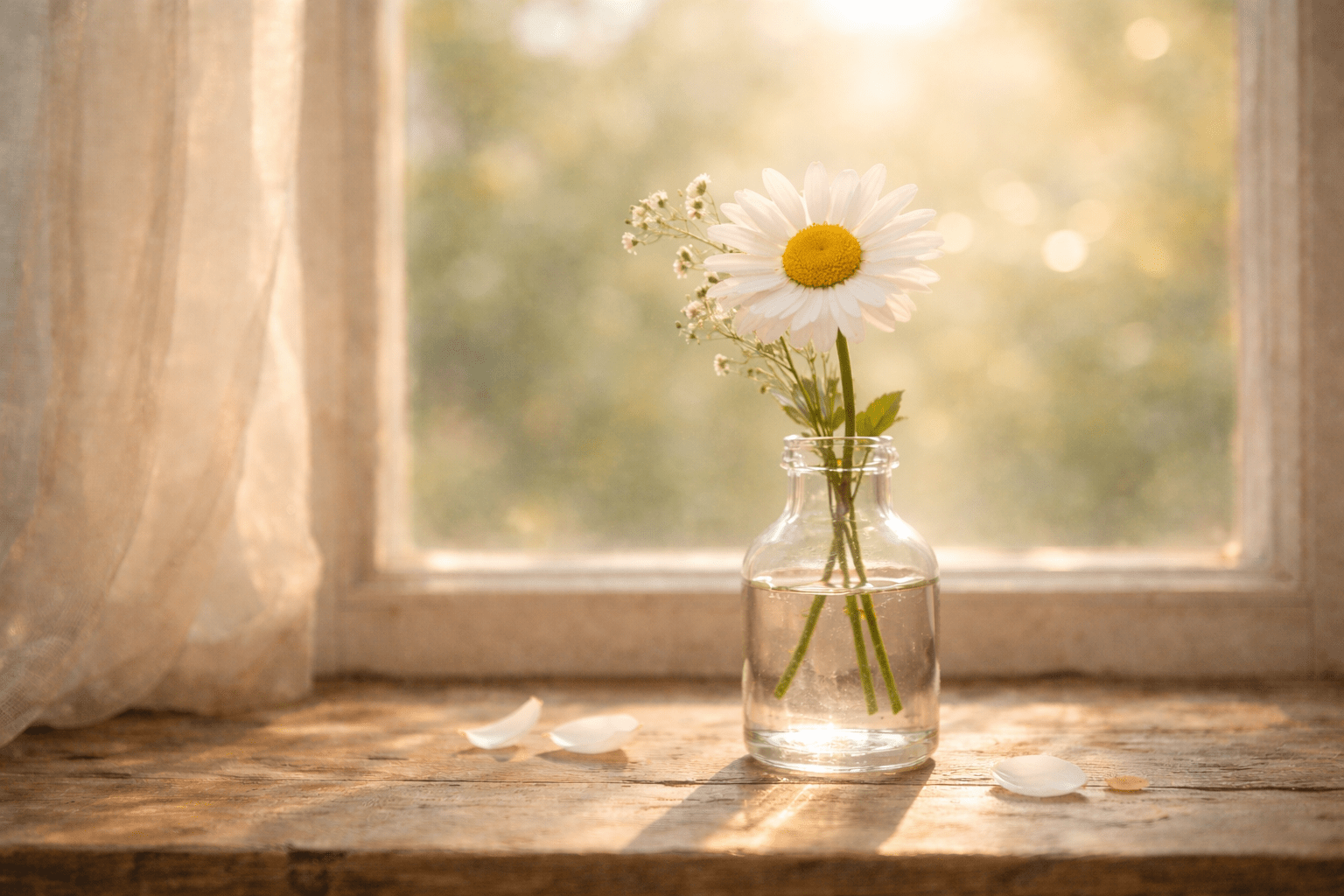
If you are going through a tough stretch, consider this permission: make room for one small beautiful thing. Let it sit with you. Let it symbolize hope if you need that, or let it just be a daisy in a glass of water catching the light.
Sometimes that is enough to get you through the next hour.